


The History of Black Broadway and How It Built a Cabin in the Sky

Updated: Aug 2
Transcript of an episode exploring the history of Black musicals that led up to the 1940 Broadway production of Cabin in the Sky.
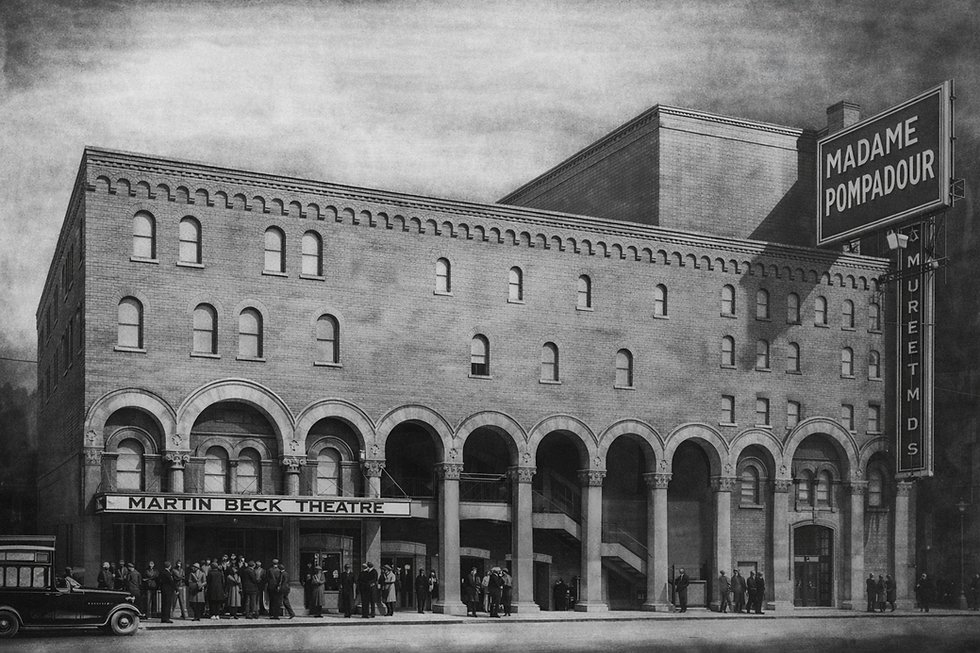
In the fall of 1940, the Martin Beck Theatre had been dark for nearly four months. The previous two productions (a prestigious drama starring Helen Hayes and a high-society comedy based on a popular novel) barely lasted four months each and failed both financially and artistically. Behind the scenes, Beck himself was still getting over one of the most painful betrayals of his career—which we talked about in the first episode. His own niece and treasurer of the Beck Theatre embezzled hundreds of thousands of dollars from the company. So at this point in his career—and at 71 years old—Beck had every reason to play it safe as he worked to get his theater back on track.

But instead, he brought in one of the most ambitious productions that Broadway season—a new musical called Cabin in the Sky that featured an all-Black company of actors, singers, dancers, and musicians at a time when their opportunities were sorely limited. You see, back in the 1920s there had been a slew of all-Black musicals and plays on Broadway, and one such revival production opened at the Beck Theatre in 1929—the play Porgy written by the white husband and wife team of DuBose and Dorothy Heyward. NY Times columnist John McWhorter explains the importance of this play at the time:

McWhorter: “Porgy is very melodramatic in its original elements, but it was directed beautifully. What really put Porgy over was Reuben Mamoulian's stage pictures. But still, it's black people taking themselves seriously on stage, which is something that would not have been a Broadway hit in 1919.”
By the 1930s, however, the Depression had halted production on many large-scale Broadway shows, especially those with all-Black casts. The one notable exception was the musical adaptation Porgy and Bess in 1935, which presented Black life in a more serious light and was written by George and Ira Gershwin.
McWhorter: “But real change of this kind—where black people doing things onstage other than tap dancing & telling silly jokes—that starts at the beginning of the 40s.”
Ever since his theater opened, Martin Beck consistently sought out reputable and even experimental shows to distinguish his theater. So when Cabin in the Sky came along, Beck saw an opportunity and did something he rarely did as a theater owner—he invested his own money into this production—which brought together one of America's biggest stars, Ethel Waters, with one of the world's most celebrated choreographers, George Balanchine. The show was created to present a "parable of Southern Negro Life.”
Sadly, Cabin in the Sky marked the last show Martin Beck ever brought to his namesake theater, because he passed away just a few weeks after opening night. With its relatively short run on Broadway and criticism at the time for its racial stereotypes, the show has largely faded from Broadway history, but its legacy is worth revisiting all these decades later. That’s because throughout the early 1900s, Black artists had already been reshaping American musical theater—from the syncopated rhythms of composer Will Marion Cook to writers like Langston Hughes and performers like Ethel Waters, all of whom refused to be confined by industry expectations. So before we can understand Cabin in the Sky, we first have to understand the Broadway these artists helped create.

“Welcome to Season 3 of Closing Night, a theater history podcast about famous and forgotten shows that closed too soon. I'm Patrick Oliver Jones, and I’ll be your guide this season as we focus on the Martin Beck Theatre—a home for serious plays, musical hits, and glorious flops—revealing just how unpredictable and unforgiving the path to Broadway can be.”
BLACK HISTORY ON BROADWAY
This year marks the 160th birthday of the American musical—with The Black Crook in 1866 considered by most to be the first Broadway musical which is defined as original songs integrated into book scenes and dance numbers. That same year, The Black Diamond was the first show to coin the term “musical comedy.” Yet despite those titles, it would be another 30 years before the first Black musical would appear on Broadway.
That moment came in 1898 with Clorindy, or The Origin of the Cakewalk, a one-act musical composed by Will Marion Cook with book and lyrics by Paul Laurence Dunbar. The show played on the Roof Garden at the Casino Theatre, and became the first Broadway musical to feature an all-Black cast. And as a linguist and student of musical theater, John McWhorter says this production introduced a new rhythm into the musical vocabulary.
McWhorter: “It would look quaint to us today, but to see these black performers singing in beautiful harmonies, this syncopated, lightly syncopated by our standards, but syncopated music with a kind of rhythm that was considered devilishly catchy at the time … that was a really exciting thing to people listening to American pop in the 1890s. It was that new feel.”
You see, prior to Clorindy, American theater primarily imitated European operettas or rehashed traditional minstrel tunes, and Cook was familiar with both. He had actually been trained as a violinist at Oberlin College, and after two years there, he studied under classical musicians and composers in Germany and in New York. However, there were few opportunities for a Black classical musician, so he pivoted to composing dance numbers as well as musicals.
Through Clorindy’s milestone production, Cook helped redefine the sound and structure of the American musical itself. And on that rooftop, as he led the musicians who were playing his score, Cook also became the first Black conductor of a white theater orchestra. And after opening night, he described the moment like this:
“When the last note was sounded, the audience stood and cheered for at least 10 minutes. Maybe when the pearly gates open wide and the multitude of hosts march in shouting, laughing, singing, emoting, there will be a happiness which slightly resembles that of Clorindy's 26 participants. I was so delirious that I drank a glass of water, thought it was wine, and got gloriously drunk. Negroes were at last on Broadway and there to stay … we were artists and we were going a long, long way.”
Black artists slowly began to achieve more attention and even recognition for their work. In fact, for the next 20 years or so, there was a stretch along 7th Avenue in Manhattan commonly known as “the African Broadway” because of the sheer number of theaters producing all-black shows.

And in 1903, Cook and Dunbar made history again with In Dahomey, often cited as the first full-length musical by Black artists to perform on a major Broadway stage. What you’re hearing is a contemporary recording of the Overture from this musical. The plot follows two bumbling, down-on-their-luck con men from Boston who become involved in a fraudulent scheme to relocate a down-and-out Black population to the "promised land" in Africa. It starred the first Black superstar comedy team of Bert Williams and George Walker and used both songs and comedy to challenge and confront racial stereotypes of the era. Cook, who would later become known as the "Father of Black Broadway," described himself as a composer trying to destroy wrongs and write beautiful music.
McWhorter: “If we went back in time, to say 1856, there are all sorts of things would throw us, but one of them would be we would find the music dull. Because there is no such thing as that kind of syncopation in Western music. African music had it, and that's where Western music gets it … Here’s this music that gives you a foot tap.”
Those fresh new rhythms may have been changing Broadway musically, but the underlying structures of the industry remained, making it difficult for Cook and other Black composers to succeed. White theater owners and producers were in control, segregating both audiences and casts. Yet through all of this, Cook would mentor artists like Duke Ellington and Eubie Blake, showing them how to blend classical structure with Black vernacular music.
As for Dunbar, he was using Black vernacular English in his poetic works as well as his musical lyrics. In fact, he was the very first Black writer to achieve widespread acceptance in the American literary establishment and support himself entirely through his writing. With such a wide audience, he used his writing to elevate Black life as worthy of serious literature and influenced many other great literary giants like Langston Hughes, Nikki Giovanni, and Maya Angelou. However, just three years after In Dahomey, Dunbar passed away from tuberculosis at just 33 years old.

Almost a decade and a half later, in 1919, there was a theater named in honor of Dunbar that became the first major theater built—and entirely owned—by African Americans in Philadelphia. It was specifically designed to offer a space for Black artists that was free from the constant discrimination in white-owned theaters. And in 1920, it would be in this very theater where the comedy team of Miller and Lyles would first meet composer Eubie Blake and lyricist Noble Sissle during a fundraiser for the NAACP.

From that meeting, this quartet would join forces to create the landmark musical Shuffle Along. Miller and Lyles adapted one of their old scripts about two grocery store owners running for mayor of a small town. Blake and Sissle mostly recycled old songs from their vaudeville act, but did write two new songs for the show. One was titled ”Love Will Find a Way" and would become the first romantic duet sung by Black performers on a Broadway stage.
The other new song they wrote would become Blake and Sissle’s signature hit: “I'm Just Wild About Harry." Here is Ivan Harold Browning, who introduced the world to this hit song, accompanied by Eubie Blake:
Shuffle Along was far from a sure thing. It had no major stars in the cast and was staged with hand-me-down costumes and sets. It tried out in New Jersey and Pennsylvania and arrived in New York $21,000 in debt. And yet, from the moment it opened in May 1921, its jazzy rhythms and energetic dances caused a sensation at the 63rd Street Theatre. as Jonathan Dewberry with the Harlem Opera Theater company explains:

"So for the first time, you had white audiences who were coming further uptown to see this new show, so much so that they had to make 63rd Street a one-way street because there was so much traffic coming in and out … So with this production … of Black artists and musicians coming together—this sort of represented a lot of changes that would influence the theater later on with Black performers."
Shuffle Along ran for 13 months as both White and Black audiences flocked to see the show—breaking the color barrier for the first time with integrated seating throughout the house. It surpassed 500 performances and proved that Black stories and musicals could be both popular and profitable. So over the next decade, more than 20 other all-Black shows premiered on Broadway, bringing steps like the Charleston and Slow Drag to more mainstream audiences and ushering in the jazz era of musicals.
Shuffle Along even came back to Broadway in 1933, but this time it only lasted 17 performances—and the boom of Black musicals was over.
McWhorter: “And then that plays out because the Depression makes it hard to get money up for a show. And so there were just fewer Broadway shows in general. And big surprise, that problem was even worse for getting money for a black production. And so after a while, you have another one of these lulls in the 1930s, when you've got so much wonderful Broadway music happening—to the extent that people can get up the money to do a show—but you're kind of almost waiting for there to be a Blake and Sissel or something like that, and that's just not happening. It took a while for anything like that to start happening again.”

It was in this environment that writer Langston Hughes made his Broadway debut in 1935 with Mulatto—a poetic play about a mixed-race child and his desire to be acknowledged as his father's heir. But instead of leaning into a nuanced exploration of racism, the producer-director took it upon himself to rewrite the show into a more sensationalized melodrama with a shocking and gratuitous rape scene. And the ultimate irony is that Mulatto became a big commercial hit, running for over 11 months with 373 performances, becoming the longest-running Broadway play by a Black playwright at the time. Hughes, though, left the experience deeply conflicted, watching audiences applaud a version of his work that he no longer recognized. But this was no isolated incident.

A few years later, in his autobiography The Big Sea, Hughes looked back on the remarkable decades of Black artistic achievement in a famous chapter titled "When the Negro Was in Vogue.” He noted that that hunger for Black music, performance, and storytelling was more of a fad than true acceptance, more curiosity than equality. Black artists had finally earned a place on Broadway, but much like Mulatto they still had little control over how their stories were told. So for Hughes, the question was no longer whether Black artists belonged on Broadway—because they surely did—it was whether Broadway was ready to give them their own voice.
McWhorter: “It took a long time for black performers to be seen as serious. Except occasionally, you know, there was room for a Paul Robeson, for example, but, you know, many, many fewer women … But gradually there was a place, and frankly, George Gershwin had a lot to do with it in creating Porgy and Bess.”
This era-defining Gershwin production opened on Broadway the same year as Mulatto. But unlike Hughes’ play, both the musical Porgy and Bess and its predecessor, the play Porgy, were written and conceived by white authors—which was common at the time. And so many of the biggest opportunities for Black performers still came from white writers and producers, not Black playwrights or composers. For example, in 1933 a musical revue called As Thousands Cheer opened on Broadway and was the first show to give a Black artist, in this case Ethel Waters, equal billing with White performers.
She famously performed "Supper Time” which is a song from the perspective of a Black woman setting the table, while agonizing over how to break the devastating news to her children that their father has been lynched. It’s hard to believe that such a devastatingly poignant song could be written by none other than Irving Berlin. But for certain white composers and writers, Blackness was seen as having an authentic and even spiritual aspect that was compelling in a way that Whiteness simply was not.
McWhorter: “There was a fascination with, as they would have put it back then, the Negro and his vitality, et cetera. And I think a lot of this was artistically sincere. The idea was that there was something truly American about Blackness. And then it was also that Blackness was considered exotic … But there were always artists who had that notion.”

Such was the case for Cabin in the Sky, a “Negro folk fable” that was led by a white creative team and being supported by a handful of white producers, including Martin Beck himself. During his years with the Orpheum Circuit, he would occasionally bring on Black performers who would crossover from the Black vaudeville circuit. And now that he ran his own theater, he had greater control in who he brought onto his own stage.
McWhorter: “And so the idea is, what kind of black musical can we create that is about more than incredibly talented Black tap dancers tapping their feet or a black woman coming out and doing the same thing? And that's where Cabin in the Sky comes in.”
The theater scene had changed dramatically by 1940 with Black artists having transformed the sound and feel of Broadway itself, yet the industry's opportunities—and limitations—were still largely determined by white producers and writers. And few performers navigated that contradiction more successfully than Ethel Waters.
WATERS IN THE SKY
In a nightclub in Philadelphia, two men enjoy their drinks on Halloween night, while across the club a tall girl, just 17 years old who had snuck in with her friends, is being persuaded to get up and sing a song. She finally steps onto the stage to sing “When You’re a Long, Long Way from Home.” The crowd loved it, so much so that they demand one encore after another. Those two men, who had been listening, turned out to be the Black vaudeville team of Braxton and Nugent. They approach the young girl and offers her a contract to sing in Baltimore. And thus began the professional career of Ethel Waters.
In 1917, Waters made history by becoming the first woman to perform this W.C. Handy tune “St. Louis Blues” on stage. And while the term “pioneer” is often used to describe many entertainers and artists, when it comes to Ethel Waters, it’s actually an understatement. During the next two decades, as a singer and actress, she played a pivotal role in bridging the gap between blues, jazz, pop, and theater—achieving numerous firsts, and here are just a few…

She became the first Black woman to appear on major commercial radio in 1922, and then to headline at the Palace Theatre in New York just three years later. Throughout the next decade, she was the first major artist to popularize songs like "Stormy Weather" and "Am I Blue?" before they became American standards. Then, in 1939, she reached two more milestones: she made broadcasting history by headlining The Ethel Waters Show on NBC, marking the first time any Black individual hosted a television broadcast, then later that year, she become the first Black woman to star in a non-musical role on Broadway. Mamba’s Daughters was a heavy drama written by the same authors of Porgy, DuBose and Dorothy Heyward, and audiences were stunned with her raw portrayal of Hagar—a deeply misunderstood woman with a hair-trigger temper. She drew on the hardships of her own upbringing to create a performance unlike anything she had done before.
McWhorter: “She was really captivating onstage, there was a kind of a plangent element to her. She's getting through, but she's clearly truly hurt about life, about being black. And she carried that with her in any role that she played … she’s really dealing with a certain amount of pain and everything is not a jolly good time, so yeah, it must have been a very interesting thing to see.”

On opening night, the audience was so spellbound that Waters received 17 curtain calls. But when NY Times critic Brooks Atkinson neither cared for her performance nor the play itself, notable figures like actress Talulah Bankhead and lyricist Oscar Hammerstein took out a full-page ad in the Times, urging the public to go see Waters' masterful performance for themselves. However, the difficulty of playing such a physically and emotionally demanding role began to take its toll on her, which she explained in an interview with Edward R. Murrow:
Waters: “It's too closely related to my past life. I mean, I don't act. I relive unhappy experiences that right along through here I'd like to forget … I constantly can't live in my tragic past, and it has been tragic. If night after night, you have to pour out your soul, and people—it reaches people, it affects people … But I have to get away from the times, because it undermines me.”
Yet as I mentioned earlier, despite performers like Waters bringing lived experience to the stage, the stories themselves were still usually created by white writers. And Cabin in the Sky would be no different, based on a play called Little Joe by Lynn Root—who began his Broadway career as a performer before writing plays in the mid-1930s. Little Joe was a fable that drew on African-American religious folklore within a story about gambling and redemption. And it took one of the most circuitous routes a play could take to the stage through a chain of random personal connections.

OK, stick with me as I take you through its winding journey from late 1939 to early 1940:
First, Root’s wife passed the script along to the wife of comedian and actor Teddy Hart, who then gave it to his brother, the famed lyricist Lorenz Hart. He wasn’t interested in the play, but did share it with his agent and business manager, Milton Bender, who immediately recognized its potential and personally delivered the script to another client, choreographer George Balanchine. Bender pitched it as the perfect vehicle for Balanchine to make his Broadway debut as a director. Then the two of them approached another Bender client, composer Vernon Duke.
McWhorter: “He was Russian-born and he wanted to advance the form of the Broadway tune. He was kind of a friend with and competitor with George Gershwin. His music is delightfully complex … always with the quirky, wonderful songs in it … and he was somebody who saw this music from the outside in such a way that it was going to be interesting how he wrote music for a show about unlettered, disadvantaged black people.”
You see, Duke was primarily known for composing classical music and standard Broadway revues, so at first he refused to write such a musical, acknowledging his own lack of awareness and experience with Black life. But he eventually agreed only if they could find a lyricist who could better understand both Black vernacular and culture. You might think this meant going to various Black writers, but no, that did not happen. Instead, they went to white lyricists known for their success in writing and popularizing urban slang and blues vernacular like Ira Gershwin, Yip Harburg, and Johnny Mercer. However, after all of them turned it down, it was John LaTouche (another client of Milton Bender) who finally said yes.
From there, the creatives went down to Virginia, along with scenic and costume designer Boris Aronson, to spend time absorbing the local music, religious traditions, and regional setting to inform their score. However, in the end, Duke says they decided to “stay away from pedantic authenticity and write our own kind of ‘colored’ songs.”
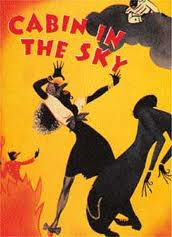
So that was Cabin in the Sky’s long and winding path to finding a creative team, and beginning the score—eventually using it as way to entice Ethel Waters back to Broadway. And that leads us to the title of the show and how it changed from being called Little Joe. Before rehearsals even began, Waters exercised a level of creative control that few performers—Black or white—could claim at the time. In fact, initially she refused to even be a part of the musical:
Waters: “So, when they brought me this play, Little Joe was a rat. He was no good and neither was Petunia in the original version. See, I'm giving it to you. This from the horse's mouth whose name is Ethel Waters. [Laughter] The result was, when he brought me the book, this man Root, I told him I said, ‘Uh uh, no way.’ I said, “I don't want—this is a farce.’ I said, ‘I don't care what preacher you have been to. I cannot use these things and sort of play my precious Savior cheap.’ I said, ‘No! I'm not going to do it.’”
She believed the story belonged to Petunia's faith, her belief in Joe, and the prayers she made to give him a chance at redemption. Ultimately, there was really no show without Waters, so lead producer Albert Lewis agreed to change the show’s name and narrative. But this kind of influence over the production didn’t end with Waters.

By 1940, Katherine Dunham was a force in both ballet and opera as well as leading her own dance company. But unlike most choreographers, she approached movement as an extension of culture itself. Her work was grounded in anthropology and shaped by years of research throughout the Caribbean. Balanchine and Duke actually traveled to Chicago to see her perform in a cabaret-style revue titled A Concert in Primitive Rhythms. They were utterly mesmerized by her technique and its authentic Afro-Caribbean and African-American vernacular movement and realized this was the missing piece for their show. So Balanchine offered Dunham her Broadway debut in the featured role of Georgia Brown—a sultry, backsliding seductress sent by Lucifer to tempt Little Joe. Her entire dance troupe was also cast to fill out the musical’s ensemble—introducing Broadway to the Dunham Technique.
McWhorter: “Actually racially authentic moves, she had them doing kind of black art dance, rather than just the frenetic tap dancing and the sort of thing that say Bill “Bojangles” Robinson did very, very well. He was one of the best tap dancers ever. But this, and we're more familiar with it now, but this modern dance adapted to the Broadway stage. Katherine Dunham really was doing something new … showing how black people could dance other than in a frenetic, grinning kind of way.
As a master of classical Russian ballet, Balanchine deeply admired Dunham's choreography, but he also recognized his own stylistic limitations when it came to Black folk and jazz dance. He couldn't physically teach or choreograph within this specialized Afro-Caribbean movement vocabulary, and he didn't want to just imitate it. So when rehearsals began in September 1940, he let Dunham take over the creation and staging of all the major jazz, nightclub, and African-inspired dance numbers.

In filling out the rest of the cast, Balanchine and Lewis brought together some of the most accomplished Black performers working at the time: Todd Duncan, who had originated the role of Porgy; Dooley Wilson, who would soon become famous as Sam in Casablanca; Rex Ingram, who had portrayed God in movie The Green Pastures and now played Lucifer Jr. in Cabin in the Sky; and there was J. Rosamond Johnson with his Gospel Choir, whose spiritual arrangements added another rich layer to the score.
McWhorter: “His arrangements would have been stirring and they would have sounded probably a lot like the “Swing Along” arrangement by Will Marion Cook … for In Dahomey … and you can hear the Black choir doing it, you know, the rich black spiritual harmonies. I'm almost positive that that is the sound that Rosamond Johnson would have had … he would have written in a style that we would recognize as spiritual jubilee singers, Black essence.”
This mixture of Russian and Black American artists made for a rather chaotic, experimental, and uniquely cross-cultural collaboration during rehearsals. George Ross of The Telegram described it this way:
“Pit a threesome of turbulent Russians against a tempestuous cast of Negro players from Harlem and what have you got? Well, in this instance the result is a lingual ruckus approaching bedlam.
There were at least a dozen instances when rehearsals came to a halt as the trio of Balanchine, Duke, and Aronson would argue in their native Russian language for several minutes. In one such moment, Waters piped up and asked what it was all about, to which Duke simply responded, “George said the answer is ‘yes!’” And rehearsals would continue on. But fortunately, producer Lewis was there serving as co-director as well as a sort of go-between for the cast and creatives. While Balanchine focused on movement and visual storytelling, Lewis handled the English-language work of the production—drilling lines, staging the dramatic scenes, refining Lynn Root's dialogue, and giving the cast a steady point of contact amid all the multilingual chaos.

But as far as the overall driving force of this production, Waters remained its leading voice. If a line of dialogue or a staging choice felt caricatured or unauthentic, Waters would flatly refuse to do it and demand changes. Aronson’s rustic, folklore-inspired set designs were also adjusted to accommodate her staging preferences. There were also some tensions between Waters and the rest of the company, including Katherine Dunham. This was because Waters held herself—and everyone around her—to very high and exacting moral standards.
McWhorter: “Yeah, Ethel Waters was not an easy person, never was. And as time went by, it got worse. And yes, there was a prim quality, and/or I think it's fair to say sometimes she would get especially jealous of younger and perhaps more conventionally pretty women. And that was always a problem. But also she was a star and she wanted it to be her show … Nowadays, I think there's less of that on Broadway. There's a certain kind of coded cordiality in American theater culture—that had not happened yet in 1940.”
But Duke recalls a different working relationship in his autobiography, saying that despite her reputation of temperamental outbursts, they had a rather cordial relationship, with he and LaTouche spending their evenings in the theater basement tailoring melodies to her vocal talents. And with just a few days before opening, Waters made it known she didn’t care for the lullaby song at the end of Act I, and that it needed more “meat and potatoes” as she put it. So Duke and LaTouche, with help from fellow Broadway lyricist Ted Fetter, came up with "Taking a Chance on Love.” Duke brought Waters to the downstairs lounge at the Beck Theatre, in-between rehearsals, and began to play the song for her. But just eight measures in, she stopped him, tweaked his cheek affectionately, and said, “That’s my favorite composer!”
Ethel Waters: “I don't call myself a singer. All I do is recite musically, and I try to paint a musical picture, and if it gets across, then I'm grateful because the story is important and the message it gives.”
Waters saw herself more as a storyteller than a singer, yet it was her rendition of this tune that made it the undisputed showstopper when Cabin in the Sky opened on October 25, 1940. Even Brooks Atkinson finally came around to appreciate what Waters brought to the stage:
“Ethel Waters has been essential to happiness in the theatre for some time. But she has never given a performance as rich as this before … Without once stepping out of character or assuming the airs of a star performer, Miss Waters captures all the innocence and humor of a storybook character, investing it also with that rangy warmth of spirit that distinguishes her acting. At the present moment, this theatergoer imagines that he has never heard a song better sung than "Taking a Chance on Love” … She stood that song on its head last evening and ought to receive a Congressional medal by way of reward.”
“Taking a Chance on Love” immediately joined the ranks of Broadway's most celebrated new songs, with the entire Duke score generally regarded as the production's greatest artistic achievement—praising its blending of lush orchestration, jazz harmonies, blues influences, and spiritual traditions into what many still consider the finest score of his Broadway career.

Critics were equally impressed by others in the cast who brought that score to life. Dooley Wilson's Little Joe perfectly balanced comedy with genuine warmth, while Katherine Dunham's Broadway debut infused Georgia Brown with humor and sensuality, cementing her status as a new theatrical force. Atkinson even remarked that under Balanchine’s direction, the dancers had been released from the “bondage of hack dancing and ugliness.” But since Dunham went uncredited for her role as co-choreographer, we know that particular praise was all thanks to her. Even the Black newspaper The California Eagle offered similar praise for the production, saying “the white brother’s favorite story about the colored brother has seldom, if ever, been told with such compelling charm and inoffensive exuberance…”
But where critics—both white and Black—largely agreed was on the weakness of the book. The New York Herald Tribune [syndicated to the Pittsburgh Gazette] was unusually blunt, dismissing Root's script as "a white man's self-conscious attempt to write a pseudo-folk fable of another race.” Many Black newspapers judged the production through a similar lens, acknowledging its achievements while still criticizing the familiar stereotypes of gamblers, temptresses, and religious caricatures. Whereas, John McWhorter takes a more nuanced approach to this production:

McWhorter: “Cabin in the Sky took a rather simple story and through the acting and the stage pictures and the directing and the stylized dancing made it into something larger than it was. And for that to happen with a black production, and now it's musical theater rather than just a drama, the way Porgy had been in 1927. That was, it was a weird thing … Cabin in the Sky was odd … it's an interesting experiment. It would be great to be there just to see, you know, what it even looked like as well as sounded like.”
Well, for those who were there, they simply couldn’t get enough of it—often prompting Waters to give encores, especially for songs like “Take a Chance on Love.” And Beck himself was a big proponent of the show, having offered it an open-ended run at his theater. But just two weeks after opening, Beck went into the hospital for an operation on a stomach ailment, and sadly died the following week on November 16th due to complications from that surgery at the age of 71.

Two days later, more than 400 people attended his memorial service, including members of the Cabin cast. Back at the theater, Martin Beck’s widow, Louise Heims Beck, took control of day-to-day operations—and you can learn more about her tenure in the first episode from this season. But as the old saying goes “the show must go on” and the cast continued performing to exuberant audiences night after night. But that didn’t mean they always got along. The rivalry between Waters and Dunham deepened as the run went on. Waters resented the enthusiastic nightly applause Dunham received for her seductive performance. The tension grew so severe that Waters demanded that Dunham's dressing room be placed as far away from hers as possible, and she continuously pressured the stage management to ensure Dunham’s choreography did not pull focus from her own musical numbers.
McWhorter: “Many stars, especially in that era, could be chillingly hierarchical about things like that. And so the idea that there would be another woman, another black woman who's being written about and getting as much attention as she is, she's feeling like this is supposed to be about me.”

As for Dunham, she consciously chose not to escalate the rivalry, but instead viewed the situation through a practical lens. She recognized that Waters was the undisputed marquee star of the show and that the production's financial survival depended entirely on Waters' box-office draw. Rather than competing with Waters for the spotlight, Dunham quietly accepted the separation backstage and focused entirely on her own performance and running her dance company. If anything, this real-world friction probably enhanced the dramatic tension between Petunia and Georgia Brown, who were written as bitter, mortal enemies fighting over the soul of Little Joe.
And going into the Christmas season, tickets sales were strong, leading up to nearly sold-out performances on New Years Day. However, as soon as the holiday crowds left in mid-January, attendance fell sharply. By February, the show was no longer earning enough each week to cover its operating expenses. And so producers announced that Cabin in the Sky would close on March 8, 1941 after 156 performances.

The Broadway run ended about $25,000 in debt (which is almost $600,000 in today’s dollars). However, the subsequent tour—starring Waters, Dunham and most of the original cast—was highly successful and profitable, with performances in Boson, Chicago, Toronto, San Francisco, and repeat engagements in Los Angeles, which is where the tour ended.
McWhorter: “And the truth is Cabin in the Sky didn't have any followers. So once you see black musical theater in the 40s continuing, you're getting interesting experiments like the Black Mikado and, you know, a Black version of the Midsummer Night's Dream. And these are very interesting things. Duke Ellington does Beggar's Holiday, which is a very interesting piece, but none of these pieces are ambitiously weird the way Cabin in the Sky was.”
This musical may have had a strange storyline and a short life on Broadway, but its impact reached far beyond that Beck stage. Dunham and her dancers introduced white theatergoers and the industry itself to a highly formalized, sophisticated, and Afro-centric modern dance vocabulary, permanently expanding what Broadway believed Black performers could do onstage.
McWhorter: “The idea, especially they were overt about it in the 20s and 30s, is that black people are supposed to do shows about tap dancing and watermelon and smiling and hijinks and things that white people don't do as well. If anybody tried to do anything else, then they'd say, well, this isn't black enough. That was often a problem.”
But the performers of Cabin in the Sky, led by Waters, showed how Black actors could infuse simple material with immense dignity, and balance serious drama with light comedy. And it was this blueprint that convinced MGM to invest in the property, and adapt the stage show into an all-Black musical film in 1943, which also starred Ethel Waters.

What started out as a musical that Waters didn't even want to do, became a milestone not only in her own career, but on Broadway as well, influencing generations of Black artists, including Billie Holiday, Ella Fitzgerald, and Mahalia Jackson. Six years later, that influence was being carried forward by other shows as well, like St. Louis Woman, which also played at the Beck Theatre and starred Pearl Bailey in her breakout performance. Bailey's easy style of throwaway humor, impeccable timing, and conversational speak-singing were a direct evolution of the relaxed, rhythmic diction and grounded character work Waters had brought to Petunia.
Ultimately, Cabin in the Sky isn't remembered because its book was groundbreaking or revolutionary. It's worth being remembered because an extraordinary company of Black artists transformed an imperfect script into an unforgettable theatrical experience. And more than eighty years later, that's still the legacy they left on Broadway.
Bonus: Eubie Blake Interview
INTERVIEWER: Tell me a little more about Shuffle Along. Did you have a director, an overall director?
BLAKE: Yeah, a fellow named Lawrence Deas. He never got the credit. He staged that show. But the other fellow came in, Sissle brought him in. I can't think of his name, white fellow. He did the polishing of the show, what you call polishing for Broadway. But really staged the show. And he was a Negro. I don't care what they got on the program, Lawrence Deas staged Shuffle Along.
INTERVIEWER:How long did it take in production from the time you started working on it until opening?
BLAKE: Oh, we worked about a month. We rehearsed about a month, maybe 6 weeks up in Harlem, right down the street from where I live on—there’s a hall there. I lived at 236th and it's near 8th Avenue. I lived between 7th and 8th Avenue. It's on the same side of the street. I walked down 2 or 3 doors and go in rehearse there. And I played the rehearsals for the show. Composers very seldom played rehearsals.
INTERVIEWER: That's right.
BLAKE: Well, we didn't have any money, so I had to play for rehearsals.
INTERVIEWER: Did you play in the show? Conducted. After it opened? You conducted?
BLAKE: I conducted. Sislin Blake went on the stage and did 7 minutes. That show was so hot that we couldn't stay on there no longer than 7 minutes.

Closing Night is a production of WINMI Media, with Patrick Oliver Jones as executive producer and host. Theme music is by Blake Stadnik, with Dan Delgado as co-producer and editor. Be sure to join me next time as another show makes it way to closing night.
Sources and materials used to create this episode...
Production History
Black Broadway & History
https://www.pbs.org/wnet/broadway/essays/post-wwii-african-american-musicals/
https://broadwaydirect.com/100-years-of-black-history-month-on-broadway/
https://www.bookbrowse.com/mag/btb/index.cfm/book_number/4283/when-broadway-was-black
https://www.americantheatre.org/2016/03/18/rap-broadways-new-jazz/
Shuffle Along / Early Black Musicals
)https://www.ibdb.com/broadway-production/shuffle-along-9073
https://www.nypl.org/blog/2012/02/10/musical-month-shuffle-along
https://www.sdmt.org/bhm-celebrating-influential-black-artist-shuffle-along-part-1/
https://syncopatedtimes.com/1920-the-year-broadway-learned-to-syncopate/
https://newlinetheatre.blogspot.com/2019/01/fascinatin-rhythm.html
Clorindy / In Dahomey
https://www.ibdb.com/broadway-production/clorindy-or-the-origin-of-the-cakewalk-530253
In Dahomey Overture - https://www.youtube.com/watch?v=c1cMQRaPlRA
Harlem Opera Theater discussion - https://www.youtube.com/watch?v=6kRS7TLECeY
Ethel Waters
Katherine Dunham
Creatives
News Coverage
https://www.nytimes.com/1940/10/13/archives/gossip-of-the-rialto-gossip-of-the-rialto.html
Sept. 20 rehearsal - https://timesmachine.nytimes.com/timesmachine/1940/09/20/112762921.html?pageNumber=26
Oct. 18 coverage - https://timesmachine.nytimes.com/timesmachine/1940/10/18/112769878.html?pageNumber=24
Opening Day - https://timesmachine.nytimes.com/timesmachine/1940/10/25/94007017.html?pageNumber=27
Brooks Atkinson review - https://www.nytimes.com/1940/10/26/archives/the-play-ethel-waters-heads-players-of-cabin-in-the-sky-a-musical.html
Martin Beck funeral - https://www.nytimes.com/1940/11/19/archives/theatre-leaders-at-beck-funeral-400-attend-rites-for-founder-of.html
Louise Beck assumes leadership - https://timesmachine.nytimes.com/timesmachine/1940/11/26/113120279.html?pageNumber=29
Legacy
Miscellaneous Audio and Performance Clips

Comments